
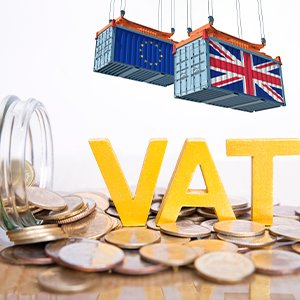
From July 2021, business to consumer (B2C) sellers dispatching their goods from a single country won’t have to register for foreign VAT and VAT filings in each EU member state where they have sales thanks to the new e-commerce EU VAT rules.
This new simplified method of registering and filing for VAT in the EU uses a new One-Stop-Shop (OSS) and benefits from the withdrawal of the Distance Selling thresholds.
These are part of wider reforms in the latest EU e-commerce VAT package, which also includes making marketplaces, such as Amazon and eBay, the deemed supplier of VAT for sale on their platforms.
What does the OSS offer?
Thanks to the OSS, businesses in the EU will be able to simply file a new OSS filing listing their sales across the EU with their regular domestic VAT return.
This facility is also open to non-EU sellers, such as UK businesses, through the ‘non-Union scheme’, who will need to nominate a single EU state to register and file VAT in.
The system will allow a seller to remit the VAT due to a single VAT authority, which then forwards the taxes to the appropriate countries in the EU. Businesses that incur VAT on imports can declare this via the OSS as well.
Originally due to be implemented on 1 January 2021, the scheme has been delayed until 1 July to give businesses and EU tax authorities more time to prepare.
Businesses should be aware that if they hold stock in other EU countries, they will not benefit from the OSS single return simplification.
Instead, they will need to be VAT registered in each Member State where they hold stock. This includes sales using the Fulfillment by Amazon program.
Is VAT also changing for the supply of services to EU consumers?
The new rules do not change the place of supply of those services but only offer a similar simplified procedure to goods to declare the VAT due in the EU Member States where the supply takes place.
The new rules extend the scope of the non-Union scheme to all services supplied to non-taxable persons that take place in a Member State following the place of supply rules.
This means that as of 1 July 2021, businesses not established in the EU supplying services to non-taxable persons (consumers) in the EU, do not need to register for VAT in each Member State in which their supplies of services take place.
Instead, the VAT due on these supplies can be declared and paid in one single Member State (the so-called Member State of identification) via the One-Stop-Shop (OSS, non-Union scheme).
Examples of B2C supplies of services (a non-exhaustive list) that could be reported under the non-Union scheme are:
- Accommodation services carried out by non-established taxable persons,
- Admission to cultural, artistic, sporting, scientific, educational, entertainment or similar events, such as fairs and exhibitions,
- Transport services,
- Services of valuation and work on movable tangible property,
- Ancillary transport activities such as loading, unloading, handling or similar activities,
- Services connected to immovable property,
- Hiring of means of transport,
- Supply of restaurant and catering services for consumption on board ships, aircraft or trains etc.
Why is the OSS so essential?
Under the existing EU VAT regime’s place of supply rules, sellers are required to charge VAT at the same rate charged by their customer’s country of residence.
This has meant that for EU cross-border sales, businesses have had to register for VAT in each Member State where their goods are sold.
To reduce the burden on smaller e-commerce businesses, the EU has operated a special VAT registration simplification, known as distance selling thresholds, which tend only to be available for sales from sellers’ domestic stocks.
However, as part of the reforms, from 1 July 2021, this simplification will be withdrawn and cross-border sellers must charge VAT at the same rate as each customer’s country of residence from their first sale and remit it to the foreign tax authorities.
That is why registration for the OSS is so essential, as it removes the need to register for VAT in each country where goods and services are supplied – allowing for the creation of a simplified VAT return for the chosen EU country where the company is registered for VAT for all EU sales.
Registration and filing
If a business is non-resident in the EU and wishes to use the OSS regime it must first register as a ‘non-Union’ taxpayer through each EU Member State’s tax authority.
Be aware that sellers with existing foreign VAT registrations or who sell from stock in their country of residence can opt to close non-resident registrations from 1 July 2021 and alternatively use the OSS to report VAT.
Once registered, businesses are required to file quarterly OSS filings like any EU e-commerce seller. They must then ensure that they file a regular domestic VAT return in at least one EU Member State.
OSS filings should be submitted on the same date as most regular quarterly VAT returns. This is usually done through the relevant tax authority’s online portal, but this may differ from one Member Start to the next, so it is important to check.
If you use monthly VAT returns instead, you should consult each EU tax authority’s website to confirm the due date and ensure VAT is remitted correctly and on time.
Despite these changes, as mentioned, businesses must continue to charge VAT at the rate of their customer’s country of residence, which can often be identified by the delivery or invoice address of each customer.
Despite the ability to report in a single country, businesses must remain aware of the varying rates and goods classifications of each Member State so that the correct VAT is charged.
The chosen domestic tax authority, in which a business is registered, is then responsible for paying the VAT received from the seller to each country.
The OSS filing needs to be made in addition to the regular VAT return submitted by UK businesses to HMRC.
Here to help
While this system should simplify the system of recording and paying VAT in the EU for many businesses, the initial challenges and complexities of registration and filing can be fairly onerous.
If you would like help registering for the new OSS and completing regular VAT returns under this system then we are ready to assist you. Please speak to our experienced team today.